

All Topics

May 21, 2023 • 4 Minute Read
On the brink of a new season
Rebecca and I asked each other a question the other night – what’s one thing you’ve learned in the last year? It’s an odd time of year to be asking that question I know, there’s no snow on the ground or fireworks overhead. I just recently joined her by stepping into a new decade however, so we’ve been doing a bit of reflecting on the decade behind and looking ahead to the decade before us. Her answer was simple. “Everything is seasonal”, she said plainly. “Nothing lasts forever, and for everything there is a season”. It’s not hard to perceive the burgeoning season around us. Lilacs are blooming, and some of your sinuses are doing a blooming of sorts in response. The birds are singing, and maybe some of you are finding your song again too. This season in our little corner of Niagara is splendid, albeit short. The tulips have already traded their brilliant tops for wilted bottoms, the first preview of summer’s relentless heat. Everything is seasonal, it’s true. The rhythms of the earth confess that too. Our springtime bulbs wouldn’t burst with colour if it wasn’t for the rest they receive under winter’s snow. In our Christian community, we’re drawing to the end of a season as well and entering another that will lead us into summer. This past Sunday was the seventh Sunday in Easter, the last before Pentecost. This coming Sunday will mark the end of a 6-month journey that we began on the first Sunday in Advent. These seasons serve to help us mark time through the course of the year by telling the story of Jesus Christ. We have a secular calendar to coordinate our lives within a secular age, and we have a sacred calendar to form our lives through the gospel story. Beginning before Christmas and ending after Easter, this season is drawing to a close. The season ahead of us moves at a different pace. Just like the grass slows due to summer’s heat, so we also slow during these next few months of ordinary time as it’s commonly known. That’s not to say we become complacent in our rhythms or trajectory. It is only to agree that everything is seasonal, and this next season is rather ordinary. Advent will come again in due time. There are some folks in our community who are stepping into new seasons as well that I wanted to tell you about. In addition to welcoming sweet Hazel into the world just 12 weeks ago, Jess has also been busy completing her fourth degree in seven years, graduating this past week from Niagara University with her Master of Science in Education. Kayla’s dad, Chris, has been battling cancer on and off for the last couple of years. He just recently got approved for a new chemo treatment, and he begins that this Thursday. Avarie, Anugraha, and Vienna have been in Nepal for the last few weeks visiting family. They’re enjoying 5 weeks there, and they’ve been busy working with orphans, introducing Vienna to a new country and culture, and hiking any mountain top that they can climb. Rebecca and I are 13 weeks along with the next addition to our family. Talk about being on the brink of a new season! We’re thrilled to be growing our family a little larger, and we’re thankful to have a church family to which we belong as well. I hope to see you on Sunday, the last Sunday of this season and a preview of the next. My heart is full of expectation for what God has in store for us. Grace and peace,
Pastor Alexander

October 27, 2026 • 4 Minute Read
Daddy, I'm scared
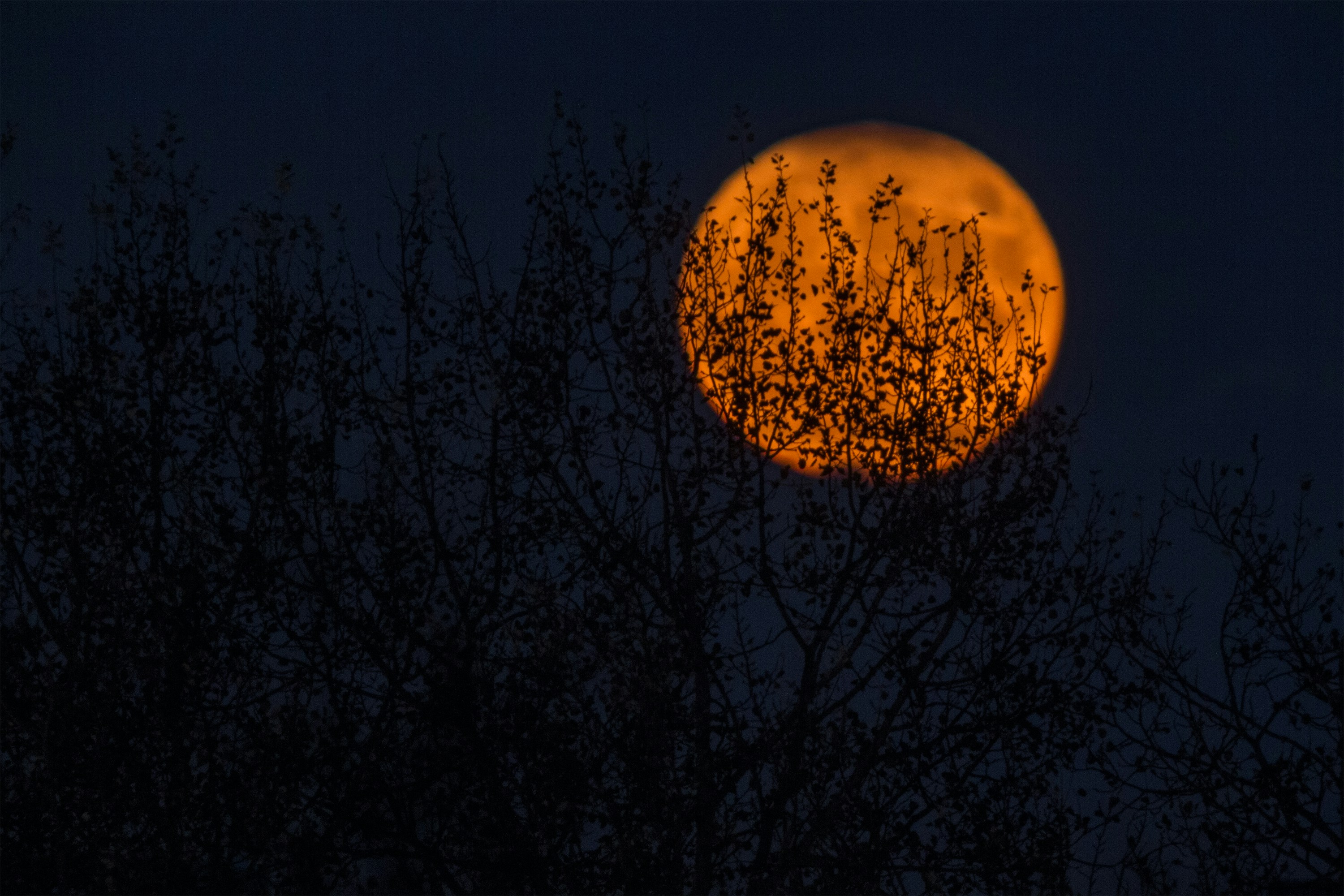
Our youngest son has been doing some exposure therapy. For the last few weeks, our morning drive to daycare has taken on a bit of a different complexion. The air is chilling requiring different dress, the trees that flank the roads are exchanging their summer skin for their autumn glory, and what was formerly clean-cut grass has been draped in darkness. “Those spooky things are not good for me” he began saying from the backseat as ghosts and ghouls, warlocks and witches watched us pull into the neighbourhood. It’s almost Halloween, and he’s noticing. Aiden is a feeler. He’s a small boy with a large capacity for emotion. He covers his ears at loud sounds, conceals his eyes at scary sights, and is not shy to use his voice to say what’s going on in his heart. These things that he’s frightened of—bolts of lightning, monsters at night, witches on the road—he can’t hide from. He’s learning to face them. So on his daily walks with his classmates through the neighbourhood, he encounters the falltime decorations as they come. A bat hung on a limb, the Paw Patrol inflated and ready to roll, a demonic clown. Each step he takes under their gaze on the sidewalk is a step he takes towards the light. He’s learning that he doesn’t have to be afraid.
I’m afraid that the exposure has been a bit too effective, however, as yesterday his backseat voice called out excitedly, “Dad, that one is good for me! You love that one too, Dad.” I’m not afraid of all of these Halloween decorations, but I am curious about them. Why do we dress our homes in death? What does it profit us to intentionally stoke fear? I think we all have an innate sense of the supernatural. We live in a regrettably disenchanted world paved in concrete and laced with cynicism. We so desperately want to believe that the world is sacred and that there is something truly spiritual beyond what we can see that we go to great lengths to reach out and touch it, if only for a moment. We tell ghost stories around the campfire, we listen to true crime podcasts, we watch scary movies, we dress up for Halloween. I do believe there is a discerning line between what is good and what is evil, what is profitable and what is deplorable. That line is certainly not black and white or set in stone. Halloween itself was a day marked on the sacred calendar long before it was a contested day in cultural Christianity. In fact, the secular celebrations and decorations are rooted in ancient religious practice. Halloween, or All Hallows Eve, is the night that precedes a Christian holiday called All-Hallows, or All Saints Day. For over a thousand years, All Saints Day has been set apart to remember great saints who lived faithful lives and often died the death of a martyr. It’s why I’ve grown quite fond of the day. For each day this fall that the pumpkins dress our porch and the goblins dress those of our neighbours, I’ll revel in the opportunity to mock the powers and principalities of this world. Yes, I believe in demons and dark things. I’m convinced of the presence of things unseen. I don’t confess, however, that they have any power over my past, present, or future. We will not be afraid. I agree with the Creator of the cosmos that death has been defeated, and life everlasting is our inheritance. Nothing can steal or scare that away from me. So take heart, dear Christian. Do not be afraid. Mock the darkness, revel in the light. God is alive. Grace and peace,
Pastor Alexander

October 6, 2026 • 3 Minute Read
Who created this?
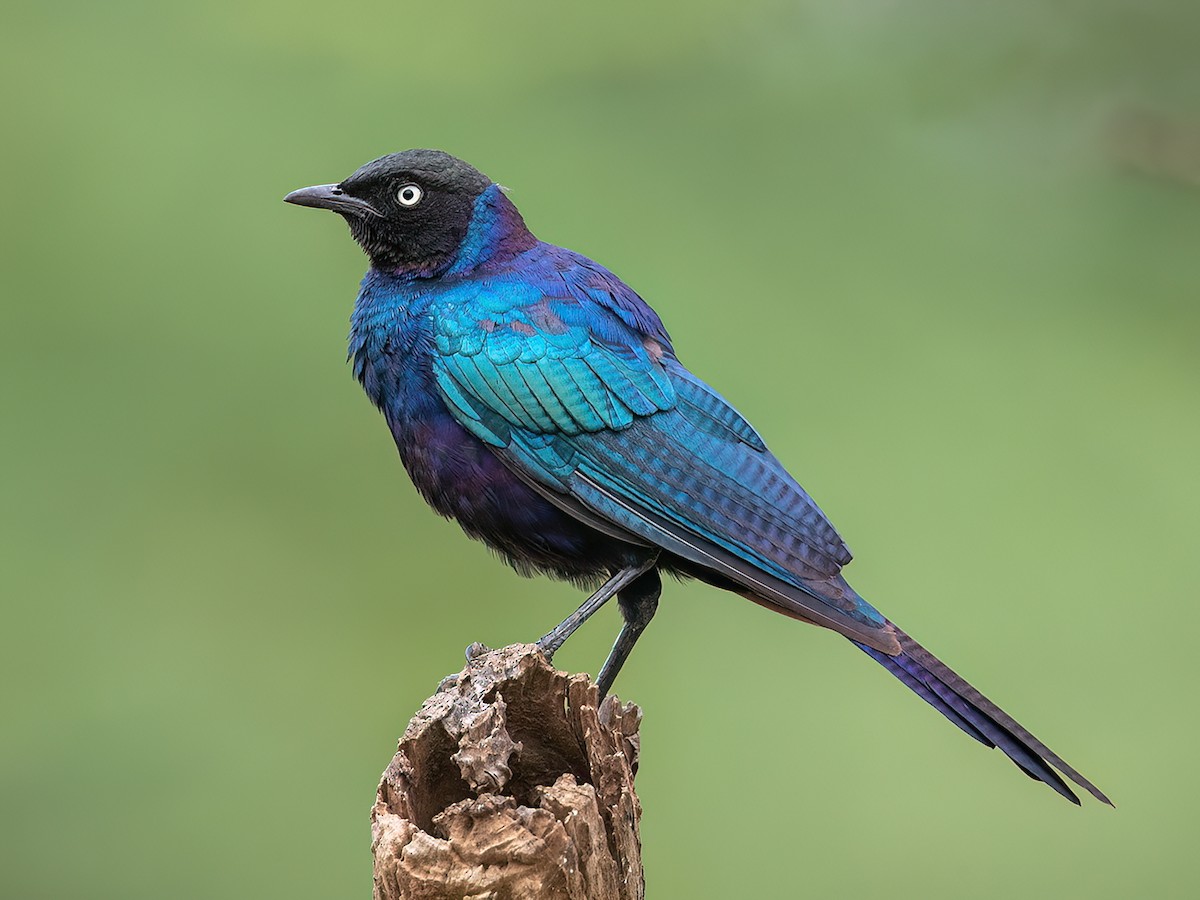
Glance at the sun. See the moon and the stars. Gaze at the beauty of earth’s greenings. Now, think. These words were written about a thousand years ago by a woman called Hildegard. She was a mystic visionary with eyes to see God in creation and a voice to tell of the glories she beheld. This weekend in our church community, Joy put on Hildegard’s mantle and encouraged us not only to think, but to tell of where we have recently seen the glories and goodness of God. Many of us chose to speak up and share of our experiences, and notably, every single testimony spoke of encountering God in the created world. You heard God’s voice in the loon’s call and felt His nearness in the monarch’s flutter. You saw His face in the setting sun and His glory in the clouds. The moon, the stars, and the maple trees all testified of His handiwork. It’s no coincidence that we see and experience God in the created world. The cosmos is His self-revelation. It’s been said that “Christ wears two shoes in the world: Scripture and nature. Both are necessary to understand the Lord, and at no stage can creation be seen as a separation of things from God." Creation is the manifest image of a creator God. The rocks cry out His praise. And so do we. Joy’s word to us didn’t end with, “Now, think.” That’s where it started. It ended with, “Now, say!” Think of the goodness of God, then speak your doxology. Give your glory sayings a voice! To be able to speak of what we’ve seen, we have to have first seen. If your vision of God feels cloudy and the evidence of His work seems hard to find, consider this evening practice. Tonight before you rest, pause for a moment of prayer. Give the time between turning off the screen and closing your eyes for sleep to God. Come to quiet, and acknowledge the presence of God. Breathe slowly and deeply. Inhale his love, exhale your hurry. Review your day like a film in your mind. Let each moment come to you—don’t stress or strive to remember them all—and as you see yourself move through the day that was, look for God. Where did I notice God? Where did God feel far off? Notice your emotions. Pay attention to what comes up, and let God meet you there. No emotion is unwelcome. Give your gratitude to God for all the things you received. Give your confessions to God for all the things you did or neglected to do. This type of evening prayer is called an examen, and it’s a good daily ritual to begin practicing. It will give you a shape for prayer when you don’t know what to say, it will heighten your awareness to God’s constant movement in your life, and it will grow your heart in gratitude to the Creator of all things. God, give us eyes to see and a voice to speak of all of your wondrous works. Grace and peace,
Pastor Alexander
July 1, 2026 • 3 Minute Read
I'm not an ornithologist
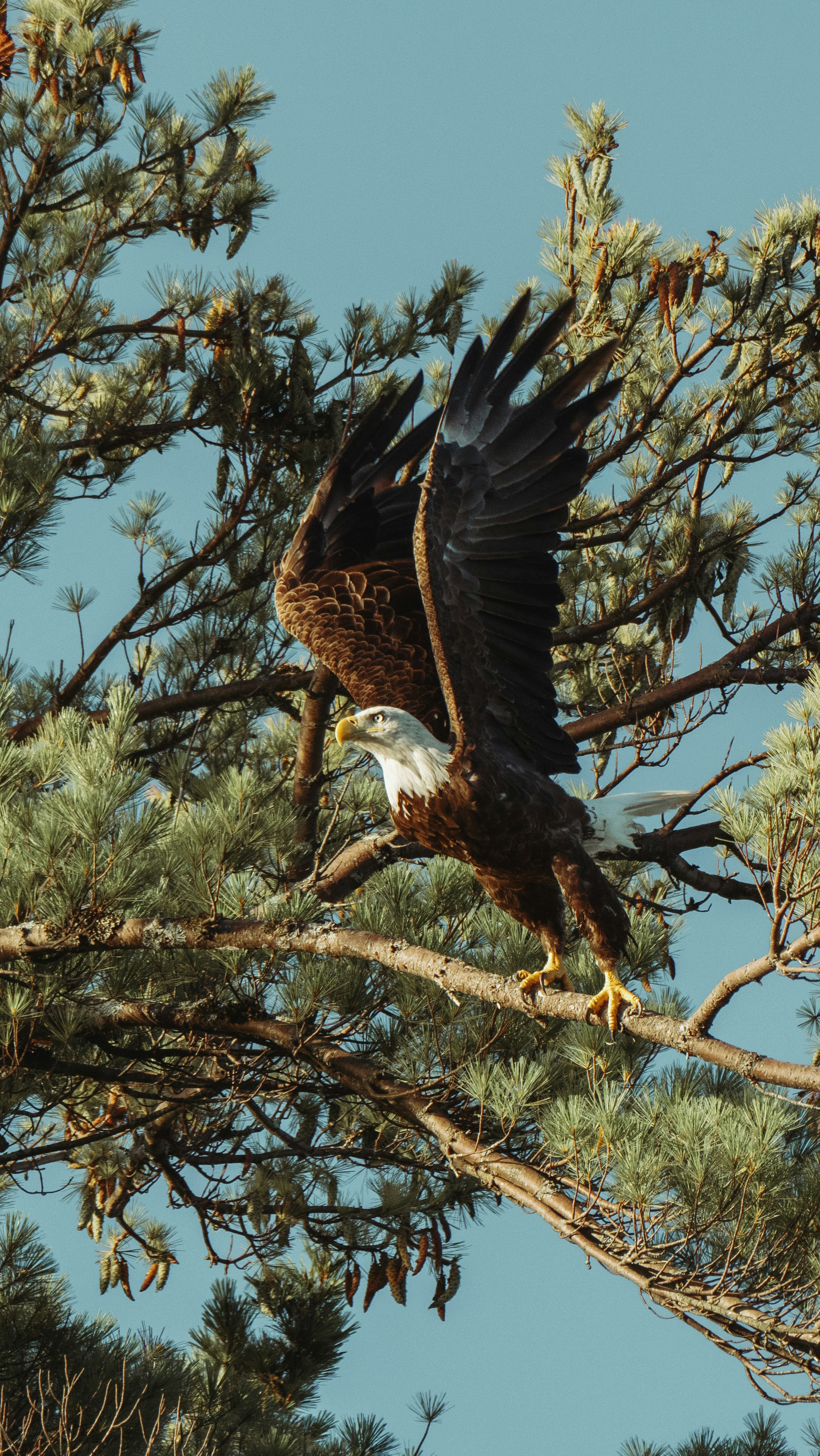
“Look up!” The two words that are ever ready on the tips of the tongues of all birders. Folks who are scientifically engaged in the study of birds get a fancy name: ornithologist. But for me and my clan (and many of you who are reading), we’re just birders. Not just birders, though. Birders are people who notice. Noticing, especially in our digital age that lures us constantly into attention deficit, is an act of spiritual practice. I’ve written to you recently about that. Look up, and notice what you see.How to see God From my stoop here in our temporary home in Jinja, Uganda, I can currently see and hear many birds. It’s been the joy of our time here by the Nile river. The Maribou Stock looms largely overhead. The Eastern Plantain-eater is somewhere in the distance, calling out with vocals that are easily mistaken for a monkey. And just in front of me, a Blue-breasted Kingfisher sits perched on a branch. It’s brilliant blue feathers arrest my attention. Her fire-engine beak is poised for a catch. Thanks to the Merlin Bird App, we’ve been able to identify many of the new bird species that we are seeing and hearing. I have a “life list” of 165 bird species logged on the app. One species in particular sings his morning song to us daily. Merlin describes his tune as “loud and complex vocalizations, including a mix of rattles, scratches, and piercing whistles.” In my words, I’d describe the song as beautiful—a complicated set of diverse sounds, but each with purpose and none without meaning. When I looked up I expected to see a bird that visually matched the complexity of her song. What I saw was unexpected: a plain black bird. At first sight, the Rüppell’s Starling appears boring and bland. Black. Singular. But when she soars into the sun, she shines iridescent. Purple and green, blue and maroon. Simply stunning. One caught the attention of our entire family just the other day, shining in the sun as she sat atop the iron fence. We all looked up. As she drew our attention up and towards the sky, we saw a splash of another colour: electric green. There, next to our beloved Starling, was a four-foot-long Battersby Green Snake. The tale of capturing that snake is another story for another time, because I’ve rambled on about birds for long enough to arrive at the point. Looking up as an act of spiritual practice, the art of noticing, is not just to see the good, the true, and the beautiful. Looking up from our feet as we journey on the path towards home alerts us to dangers and diversions that could cause us to stray. Our spiritual formation is not a destination, it’s a journey. It’s been called “a pilgrimage of the soul—if we want to keep growing, we have to stay on the journey, we have to stay on the road.” We must resist the despondence of staring at our feet as we trudge along. Instead, with our eyes up, we look for the signposts of the journey towards home. We meet at the Table, and receive our food for the journey. And we walk with our heads held high along the narrow path, for on our pilgrimage, we are being saved. Grace and peace,
Pastor Alexander
April 21, 2026 • 3 Minute Read
How to see God
My dad takes a conservative approach to giving and using nicknames. For the most part, he’ll call you by your given name. That was my experience as a child with one exception – he affectionately called me Farsight. Born from the imagination of C.S. Lewis into the land of Narnia, Farsight was a talking eagle who served as a messenger to the King. True to his nature and name, his eyesight was spectacular. He saw what others couldn’t. I guess I garnered the name thanks to my ability to notice. The deer on the field edge, the chickadee perched, the missing lego over there. By nature it seems, I’m often able to see what others can’t. Yet here’s the truth – I’m not eagle-eyed. My ability to see is no more than 20/20, in fact without my glasses, it’s much less than that. I’m convinced, however, that seeing—and more importantly, noticing—is a nurtured ability. It’s practiced and perfected. It’s work. The poet says, “to pay attention is our endless and proper work.” The priest agrees: “My only prayer practice is attention.” There’s a sacred discipline to the art of noticing. Paying attention to the budding branch, the singing bird, the forming storm, is no doubt an act of spiritual practice. This act of noticing makes an opportunity to at least acknowledge God, and at best encounter him. Worship him. See him, hear him, smell him, touch him, taste him. Worship him. And yes, this takes practice. It’s not hyperbole to say that there are more voices and visions vying for our attention now more than there ever have been, so this work may be more difficult than ever as well. Hard work is good work, beloved. Begin here with an intentional choice today: go for a walk,
get a house plant,
look up from your phone.
gaze at the gluten structure of a piece of bread,
think about your fingerprints,
look up from your phone.
listen to a bird song,
listen to a secular song,
look up from your phone. Look up, look around, look above and below. Open your eyes to see that there’s evidence of resurrection everywhere you look. But you have to look. God can be and is revealed in all manner of ordinary things, especially created things. There are reflections of his goodness in just about every corner, crack, and crevasse if you’re looking for him. May we be formed into a people who are always looking, noticing, and behold God wherever he may be found. Grace and peace,
Pastor Alexander

June 5, 2023 • 3 Minute Read
I met God the other night
I met God the other night while I was washing my car. I made the mistake of buying a black car. In fact, we have two black cars. It’s not an objective mistake in the sense that black cars are worse than any other colour car by any meaningful metric. The nature of black paint however is that it almost never looks clean. Any spot of water, dirt, or pollen (of which there has been plenty lately) seems to be accentuated on a black canvas, and frankly is a glaring sore to my eye. That’s just me, that’s how I’m wired. You likely don’t care too much if your car is spotless or not and that’s good for you - sincerely, it’s good for you. I’m wired differently though, but thankfully I’m also inclined to enjoy washing my car by hand. So I took a look at the forecast to see how long my labour would be worth, and with nothing but clear skies in sight I set out to wash the car. Asher was asleep, the evening was clear and cool, it was serene. With supplies in hand I made my move towards the driveway and there was God, waiting to met me. There’s a monkish way of moving through the world called liber mundi - “the world as a book”. It’s a way of living that moves slowly through the created cosmos, with eyes and ears open and attentive to see a story revealed through creation, as if it were a book to read. For us Christians, we believe that the world is the Lord’s, and it is a very reflection of his image. A revelation of sorts. God met me in the driveway in the stillness of being dedicated to one singular task, outside of the office and the home, and in the quiet of the evening. Without any external output or stimulus (and even without my AirPods in my ears plugging up my senses from the world around me), I was able to perceive and receive the peace of God while kneeling in soapy water on the tarmac. I’m not great at this way of living, and I wouldn’t even go as far as suggest that I’m good at it - but I’m trying. I’m trying to see glory in potato flowers and dandelions. I’m hoping to move on my feet and my pedals more often than I do on rubber powered by cylinders. I’m attempting to listen to less information (podcasts, sermons, etc.) and listen more to friends, family, and foes. I’m learning that the world is a book. I want to read it. Avarie, Anugraha, and Vienna begin their journey home from Nepal today. Pray for them whenever you remember them, and look forward to welcoming them home on Sunday! Grace and peace,
Pastor Alexander
October 27, 2026 • 4 Minute Read
Daddy, I'm scared
Our youngest son has been doing some exposure therapy. For the last few weeks, our morning drive to daycare has taken on a bit of a different complexion. The air is chilling requiring different dress, the trees that flank the roads are exchanging their summer skin for their autumn glory, and what was formerly clean-cut grass has been draped in darkness. “Those spooky things are not good for me” he began saying from the backseat as ghosts and ghouls, warlocks and witches watched us pull into the neighbourhood. It’s almost Halloween, and he’s noticing. Aiden is a feeler. He’s a small boy with a large capacity for emotion. He covers his ears at loud sounds, conceals his eyes at scary sights, and is not shy to use his voice to say what’s going on in his heart. These things that he’s frightened of—bolts of lightning, monsters at night, witches on the road—he can’t hide from. He’s learning to face them. So on his daily walks with his classmates through the neighbourhood, he encounters the falltime decorations as they come. A bat hung on a limb, the Paw Patrol inflated and ready to roll, a demonic clown. Each step he takes under their gaze on the sidewalk is a step he takes towards the light. He’s learning that he doesn’t have to be afraid.
I’m afraid that the exposure has been a bit too effective, however, as yesterday his backseat voice called out excitedly, “Dad, that one is good for me! You love that one too, Dad.” I’m not afraid of all of these Halloween decorations, but I am curious about them. Why do we dress our homes in death? What does it profit us to intentionally stoke fear? I think we all have an innate sense of the supernatural. We live in a regrettably disenchanted world paved in concrete and laced with cynicism. We so desperately want to believe that the world is sacred and that there is something truly spiritual beyond what we can see that we go to great lengths to reach out and touch it, if only for a moment. We tell ghost stories around the campfire, we listen to true crime podcasts, we watch scary movies, we dress up for Halloween. I do believe there is a discerning line between what is good and what is evil, what is profitable and what is deplorable. That line is certainly not black and white or set in stone. Halloween itself was a day marked on the sacred calendar long before it was a contested day in cultural Christianity. In fact, the secular celebrations and decorations are rooted in ancient religious practice. Halloween, or All Hallows Eve, is the night that precedes a Christian holiday called All-Hallows, or All Saints Day. For over a thousand years, All Saints Day has been set apart to remember great saints who lived faithful lives and often died the death of a martyr. It’s why I’ve grown quite fond of the day. For each day this fall that the pumpkins dress our porch and the goblins dress those of our neighbours, I’ll revel in the opportunity to mock the powers and principalities of this world. Yes, I believe in demons and dark things. I’m convinced of the presence of things unseen. I don’t confess, however, that they have any power over my past, present, or future. We will not be afraid. I agree with the Creator of the cosmos that death has been defeated, and life everlasting is our inheritance. Nothing can steal or scare that away from me. So take heart, dear Christian. Do not be afraid. Mock the darkness, revel in the light. God is alive. Grace and peace,
Pastor Alexander
October 6, 2026 • 3 Minute Read
Who created this?
Glance at the sun. See the moon and the stars. Gaze at the beauty of earth’s greenings. Now, think. These words were written about a thousand years ago by a woman called Hildegard. She was a mystic visionary with eyes to see God in creation and a voice to tell of the glories she beheld. This weekend in our church community, Joy put on Hildegard’s mantle and encouraged us not only to think, but to tell of where we have recently seen the glories and goodness of God. Many of us chose to speak up and share of our experiences, and notably, every single testimony spoke of encountering God in the created world. You heard God’s voice in the loon’s call and felt His nearness in the monarch’s flutter. You saw His face in the setting sun and His glory in the clouds. The moon, the stars, and the maple trees all testified of His handiwork. It’s no coincidence that we see and experience God in the created world. The cosmos is His self-revelation. It’s been said that “Christ wears two shoes in the world: Scripture and nature. Both are necessary to understand the Lord, and at no stage can creation be seen as a separation of things from God." Creation is the manifest image of a creator God. The rocks cry out His praise. And so do we. Joy’s word to us didn’t end with, “Now, think.” That’s where it started. It ended with, “Now, say!” Think of the goodness of God, then speak your doxology. Give your glory sayings a voice! To be able to speak of what we’ve seen, we have to have first seen. If your vision of God feels cloudy and the evidence of His work seems hard to find, consider this evening practice. Tonight before you rest, pause for a moment of prayer. Give the time between turning off the screen and closing your eyes for sleep to God. Come to quiet, and acknowledge the presence of God. Breathe slowly and deeply. Inhale his love, exhale your hurry. Review your day like a film in your mind. Let each moment come to you—don’t stress or strive to remember them all—and as you see yourself move through the day that was, look for God. Where did I notice God? Where did God feel far off? Notice your emotions. Pay attention to what comes up, and let God meet you there. No emotion is unwelcome. Give your gratitude to God for all the things you received. Give your confessions to God for all the things you did or neglected to do. This type of evening prayer is called an examen, and it’s a good daily ritual to begin practicing. It will give you a shape for prayer when you don’t know what to say, it will heighten your awareness to God’s constant movement in your life, and it will grow your heart in gratitude to the Creator of all things. God, give us eyes to see and a voice to speak of all of your wondrous works. Grace and peace,
Pastor Alexander

September 22, 2026 • 3 Minute Read
How much is too much?
That’s a bit too much sugar in my tea. The music is a little too loud in this restaurant. I got too much sun on my skin today. How much is too much? In some ways, it’s the perennial question of our day. Not because we all have more than we need, but because the spirit of the air incessantly persuades us to believe that more stuff, more pleasure, more money, more of more will fill the God-shaped hole in our hearts. When the truth is, you already have everything you need. God, the giver of life, has given you the grace enough to survive. You are alive. In Him, through Him, by Him, and for Him, we live. We have all we need for being. Yet as we are living, it is imperative to know how much is too much. Gregory the Great calls it the great art to moderation. In all things, he suggests, the Christian should seek to live a life of balance. Not too far to the left, or not too far to the right. Not too high or too low. A moderate life, unable to be swayed to extremes in either direction, steady in step on the journey with God. It’s apt that St. Gregory calls this moderation an art, because it truly is a learned discipline that is formed over time to know how much is too much. We’re not born knowing. A five-year-old doesn’t intuitively know how much sugar is too much. A fifteen-year-old must be told how much screen time is enough. A fifty-year-old is still learning how much money they should seek to earn, keep, and give away. We will not stumble our way into mastering this art. This is true of every spiritual discipline. The question is not am I being formed, the question is what is forming me? This much is sure—we will either be formed on purpose or by osmosis. So consider this: begin the practice of regularly asking yourself, your closest friends, and those in your church community, how much is too much? By asking the question, we open ourselves to an answer. God is sure to meet us in our prayer with an answer, guiding us by his grace into learning how to live a moderate life. I imagine that we will find great joy, peace that lasts, and newfound liberation along the way. Grace and peace,
Pastor Alexander

September 8, 2026 • 2 Minute Read
A Blessing For A New School Year
For many people in our community, today marks the beginning of a new season. Students are going back to school, and littles are making their way there for the first time. Teachers are going back to work, and parents are adjusting to new family schedules. To navigate any transition like this, we turn to prayer. We commit our anxiety, our stress, and the rhythm of our entire lives to the Giver of life. Wherever you find yourself today, pause for this moment and prayer this blessing. The year is tilting
toward the start of school again,
but truth be told,
we’re not ready. We’re still hanging on to summer,
to the promise it held for
long-awaited connections and celebrations,
for refreshment for our bodies and souls
in water and sky and colour and sunlight,
and all those little moments given to us
where we could linger just a little longer. Now that it’s almost over,
we don’t want to let it go.
The beauty.
The freedom.
All that was life-giving. God, could you help us stretch it,
extend it,
and maybe even blend it
into this coming school year? Parents, students, teachers, all,
may your newly-structured days
breathe with creativity,
your new duties be infused with delight. As you write on those fresh new calendars
may you trust that your plans
are a lot like magic ink. Much may seem to disappear into obscurity,
but whatever is done in love will remain. (Kate Bowler)
April 21, 2026 • 3 Minute Read
How to see God
My dad takes a conservative approach to giving and using nicknames. For the most part, he’ll call you by your given name. That was my experience as a child with one exception – he affectionately called me Farsight. Born from the imagination of C.S. Lewis into the land of Narnia, Farsight was a talking eagle who served as a messenger to the King. True to his nature and name, his eyesight was spectacular. He saw what others couldn’t. I guess I garnered the name thanks to my ability to notice. The deer on the field edge, the chickadee perched, the missing lego over there. By nature it seems, I’m often able to see what others can’t. Yet here’s the truth – I’m not eagle-eyed. My ability to see is no more than 20/20, in fact without my glasses, it’s much less than that. I’m convinced, however, that seeing—and more importantly, noticing—is a nurtured ability. It’s practiced and perfected. It’s work. The poet says, “to pay attention is our endless and proper work.” The priest agrees: “My only prayer practice is attention.” There’s a sacred discipline to the art of noticing. Paying attention to the budding branch, the singing bird, the forming storm, is no doubt an act of spiritual practice. This act of noticing makes an opportunity to at least acknowledge God, and at best encounter him. Worship him. See him, hear him, smell him, touch him, taste him. Worship him. And yes, this takes practice. It’s not hyperbole to say that there are more voices and visions vying for our attention now more than there ever have been, so this work may be more difficult than ever as well. Hard work is good work, beloved. Begin here with an intentional choice today: go for a walk,
get a house plant,
look up from your phone.
gaze at the gluten structure of a piece of bread,
think about your fingerprints,
look up from your phone.
listen to a bird song,
listen to a secular song,
look up from your phone. Look up, look around, look above and below. Open your eyes to see that there’s evidence of resurrection everywhere you look. But you have to look. God can be and is revealed in all manner of ordinary things, especially created things. There are reflections of his goodness in just about every corner, crack, and crevasse if you’re looking for him. May we be formed into a people who are always looking, noticing, and behold God wherever he may be found. Grace and peace,
Pastor Alexander
July 17, 2023 • 3 Minute Read
The portrait of a praying woman
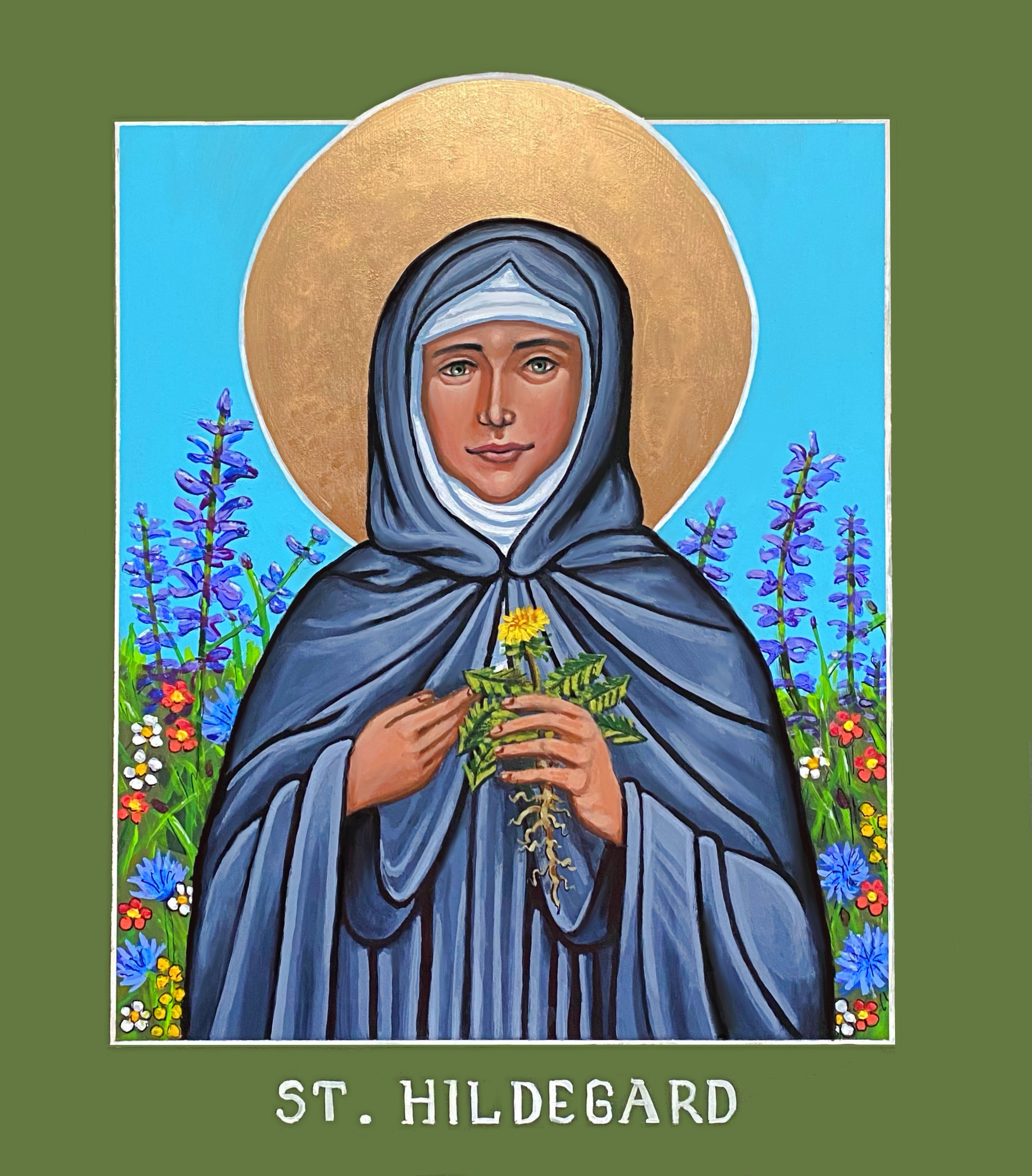
It’s rumoured that she was younger than 8 years old when her parents dedicated her to a Benedictine monastery on the westside of Germany. There she would live and grow in the grace of God, leading her fellow nuns into the Light through music, visions, and connection to the earth. Her name was Hildegard of Bingen, she died in 1179, and her portrait hangs in our kitchen by the back door. I bought her portrait as a gift to Rebecca earlier this year as winter was melting into spring. We hung it by the back door intentionally, because the backdoor leads us to our garden. Saint Hildegard reminds me of Rebecca in all sorts of ways, but especially in the way that she revered the cosmos and everything within it. She was a gardener, a forager, and a medical plant practitioner. She didn't want to simply visit this world but wanted to be fully in it, embracing the wonder and goodness of God's creation. "Glance at the sun,” Hildegard says. “See the moon and the stars. Gaze at the beauty of earth's greenings. Now think. What delight God gives to humankind with all these things. Who gives all these shining gifts, if not God?" That reads like a poem, doesn’t it? A Psalm, even? We’re practicing praying the Psalms as a community, beginning each one of our worship services by praying an entire poem together. The Psalms are the training ground for prayer, and so we’re learning how to pray. One Psalm at a time. Today, pray this Psalm of creation with me. If you’re reading this, you’re surely looking at a screen of some kind. So take a step outside or at the very least move yourself next to a window, behold the cosmos, and let us pray: Hallelujah!
Praise God from heaven, praise him from the mountaintops;
Praise him, all you his angels,
praise him, all you his warriors,
Praise him, sun and moon,
praise him, you morning stars;
Praise him, high heaven, praise him, heavenly rain clouds;
Praise, oh let them praise the name of God—he spoke the word, and there they were!
He set them in place from all time to eternity;
He gave his orders, and that’s it!
Praise God from earth, you sea dragons, you fathomless ocean deeps;
Fire and hail, snow and ice, hurricanes obeying his orders;
Mountains and all hills, apple orchards and cedar forests;
Wild beasts and herds of cattle, snakes, and birds in flight;
Earth’s kings and all races,
leaders and important people,
Robust men and women in their prime,
and yes, greybeards and little children.
Let them praise the name of God—it’s the only Name worth praising.
His radiance exceeds anything in earth and sky;
he’s built a monument—his very own people!
Israel’s children, intimate friends of God.
Hallelujah! Psalm 148, The Message Translation Grace and peace,
Pastor Alexander
June 19, 2023 • 3 Minute Read
On prayer, honeybees, and petrichor
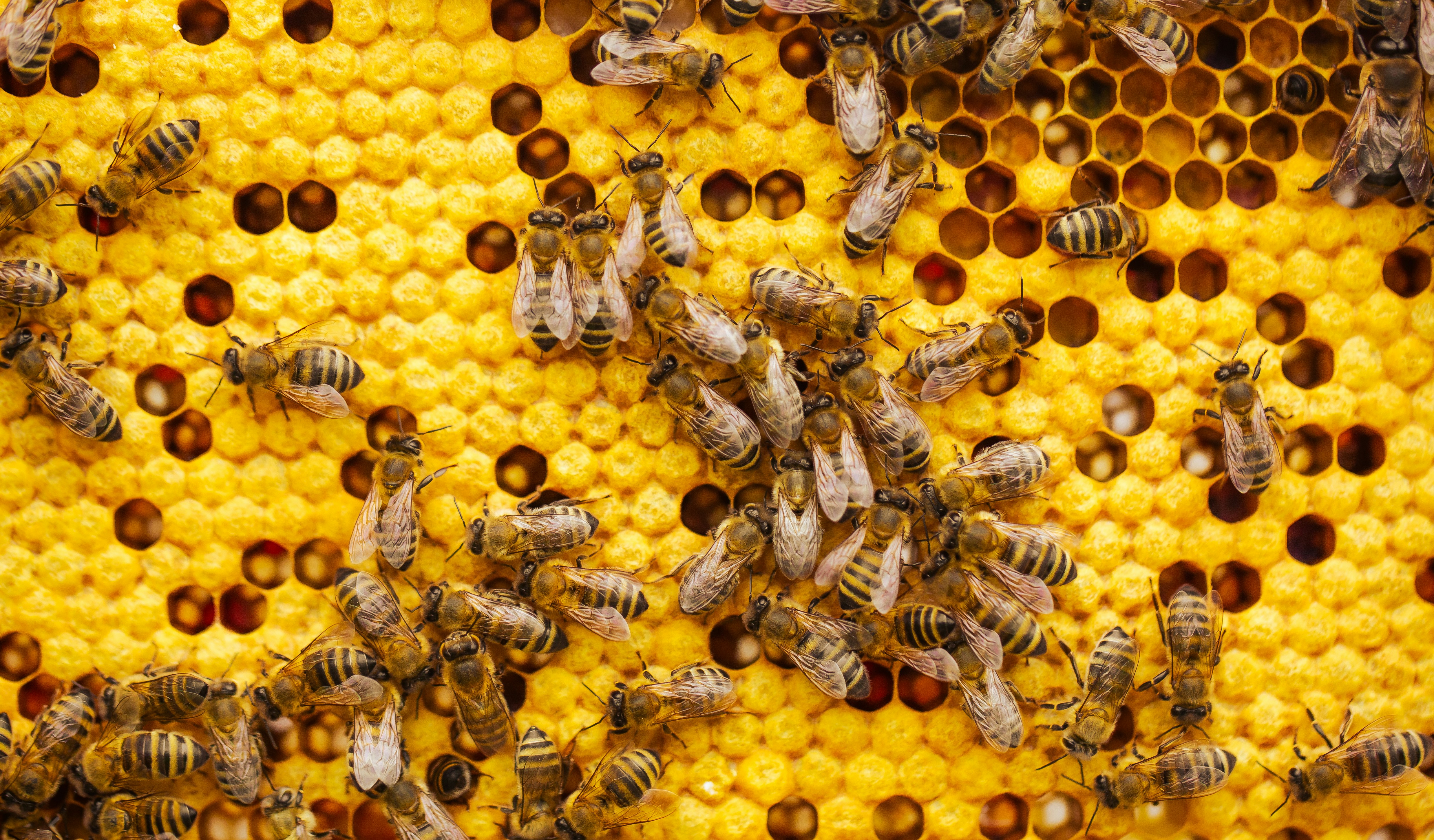
It’s odd, becoming a parent. In the job description is the daunting task of dreaming up an infinite list of things to teach your children (I say infinite because it grows in length each day), and the even taller task of ordering that list in a sequence of importance. What’s more important - teaching Asher to be kind or to brush his teeth? To look both ways before crossing the street or to pick flowers for his mom? Some days we work on kindness. Some days his teeth are clean. Near the top of my list of important things to teach our kids is the practice of prayer. That sounds like a tall task in and of itself, but maybe I can help alleviate some pressure with this - prayer is not a skill to be mastered, but a practice to be practiced. So that’s how I teach Asher, we practice. He’s learning by rhythm and repetition, as every morning as we turn into his daycare neighbourhood I turn off whatever we’re listening to, look at him in the mirror, and say “ok, it’s time to say a prayer”. Our recipe is simple - we practice thanksgiving. I begin by thanking God for the day, his mercy, and then a few things that come to my mind. He usually adds a few thanksgivings from the backseat like “balls, Aunt Roo Roo and Aunt Ray Ray, or meat sticks”. In Jesus’ name we pray, “amen!”. Henri Nouwen wisely confesses that “I am beginning to see that much praying is grieving”, and yes, I believe that to be true. I am beginning to see however that much of praying is thanksgiving. In fact, thanksgiving is a prayer enough. So, here’s ten things I’m thankful for today: Friends that turn into family The work of honey bees Mercy The way my dad hugs me every time I see him Petrichor (a pleasant smell that frequently accompanies the first rain after a long period of warm, dry weather) The song “I want to serve God” by Sam McCabe The privilege to steward a little parcel of land The wisdom of elders The wonder of children The baby dedication of Mary into the family of faith this coming Sunday Enter his presence with the password: “Thank you!”
Make yourselves at home, talking praise.
Thank him. Worship him.
For God is sheer beauty,
all-generous in love,
loyal always and ever. Psalm 100 Grace and peace,
Pastor Alexander

July 3, 2023 • 2 Minute Read
I didn't pray against the rain
It’s raining right now as I write this, as it has been since yesterday. The skies severely opened up above us this weekend as if the ground below us had its mouth agape in desperate need of hydration. Truthfully, that’s exactly why I couldn’t find a prayer to pray against the rain this weekend in anticipation of our church picnic - certainly I was outnumbered by the farmers praying for the exact opposite. Despite the weather, we had an absolutely splendid Sunday this weekend at our annual church picnic. It’s a joy to watch kids be kids, to connect with each other casually, and to enjoy the little corner of land that we steward at the corner of Concession 7 and Queenston Road. The rain was actually a pleasant balm of sorts, keeping us cool and lubricating the slide on the bouncy castle. The annual picnic serves as a mile marker for us - summer is surely upon us. My favourite season is whichever one we’re currently in, but I know that many of you are most fond of this one. Summer is full of all kinds of glories like fresh strawberries and peaches later, family camping trips and simply staycations. It’s a season defined by sunshine, rest, and play. During the summer season as many of us are engaged in resting, playing, et cetera, our weekend gatherings tend to take on a different complexion. They are often smaller, shorter, and simpler. That’s good, too. No less glorious than any other Sunday. It’s perfectly permissible to relax into the rhythm of the summer while still staying connected to community. So enjoy your summer, practice justice, love mercy. Walk in the grace of God and keep your eyes open to see glories revealed in every step you take. Each Sunday we will continue to re-gather and re-member. We’ll see you at the corner of Concession 7 and Queenston Road. It looks like the heavens are almost done drenching the earth for today, and the forecast for the rest of the week is looking bright. It’s my prayer that whatever God is watering in your soul will soon bloom to life in the sun that comes after the rain. Grace and peace,
Pastor Alexander
August 1, 2023 • 3 Minute Read
Our commitment to community
Sometime in early 2019 a headline in the local newspaper tugged our hearts into action. “Niagara Falls in Desperate Need of Respite Care” it read, reporting on the urgent need for foster homes in the city. Respite (or short term) homes were of particular demand to help meet the emergent needs of newborns coming into care due to the increasing crisis of opioid use. That was the thread that towed our heart strings towards opening our home to foster care. Fast forward a few seasons, dozens of hours of training, and hundreds of pieces of paper work to Mary’s parent’s backyard in the late summer. In unconventional fashion and in complete secret, our friends and family threw us a shower. Rebecca and I had only been married for a couple of years, we had no kids of our own yet, and we had just moved into our first home. Our community gleaned that we had a lot of the same needs that expecting parents would, so they surrounded us with a shower as if we were welcoming our own. We received diapers, toys, and clothes, amongst a bounty of other things to prepare us for the journey ahead. What I remember from that day wasn’t the gifts though, it was the commitment that our community made. Much like when we dedicate children in our church, our community stood on the brink of this new season with us and said “we’re here for you too”. I believed them then, and they’re proving it now. Jump forward in time again and Rebecca and I have a toddler of our own, another on the way, and a life that is full to the brim. We’ve harboured countless children in our home since that shower in the summer. This week, the phone rang again. It’s rarely easy to say yes, but the good thing to do is often the difficult one. We said yes to a 9 month old little boy and for a week our house has been stretching at the seams. I’m writing this with that boy sleeping in my arms, and two of those aforementioned friends are currently walking out our front door. “Want us to bring pizza over for dinner tonight?” they asked earlier in the day, inviting themselves over with dinner in hand. We shared a simple and hectic meal - the adults laughed, the babies cried - and from across the table I saw Jordan and Jessica doing exactly what they pledged to do for us all those years ago. It was a promise fulfilled in a pizza. It was love, grace, and community embodied. We had an unspoken need this week and our friends perceived it. You’ll surely have a need that I hope to meet for you. This is the commitment we’ve made to each other in this community, and we are bound by the love of God that is building us up into his body. So if you’re reading this letter, consider this my affirmation of my commitment to you. I hope it also fans the flame of community life and love in your heart as well. Grace and peace,
Pastor Alexander