How to see God

Alexander Mills • Pastor
April 21, 2026

3 Minute Read

My dad takes a conservative approach to giving and using nicknames. For the most part, he’ll call you by your given name. That was my experience as a child with one exception – he affectionately called me Farsight.

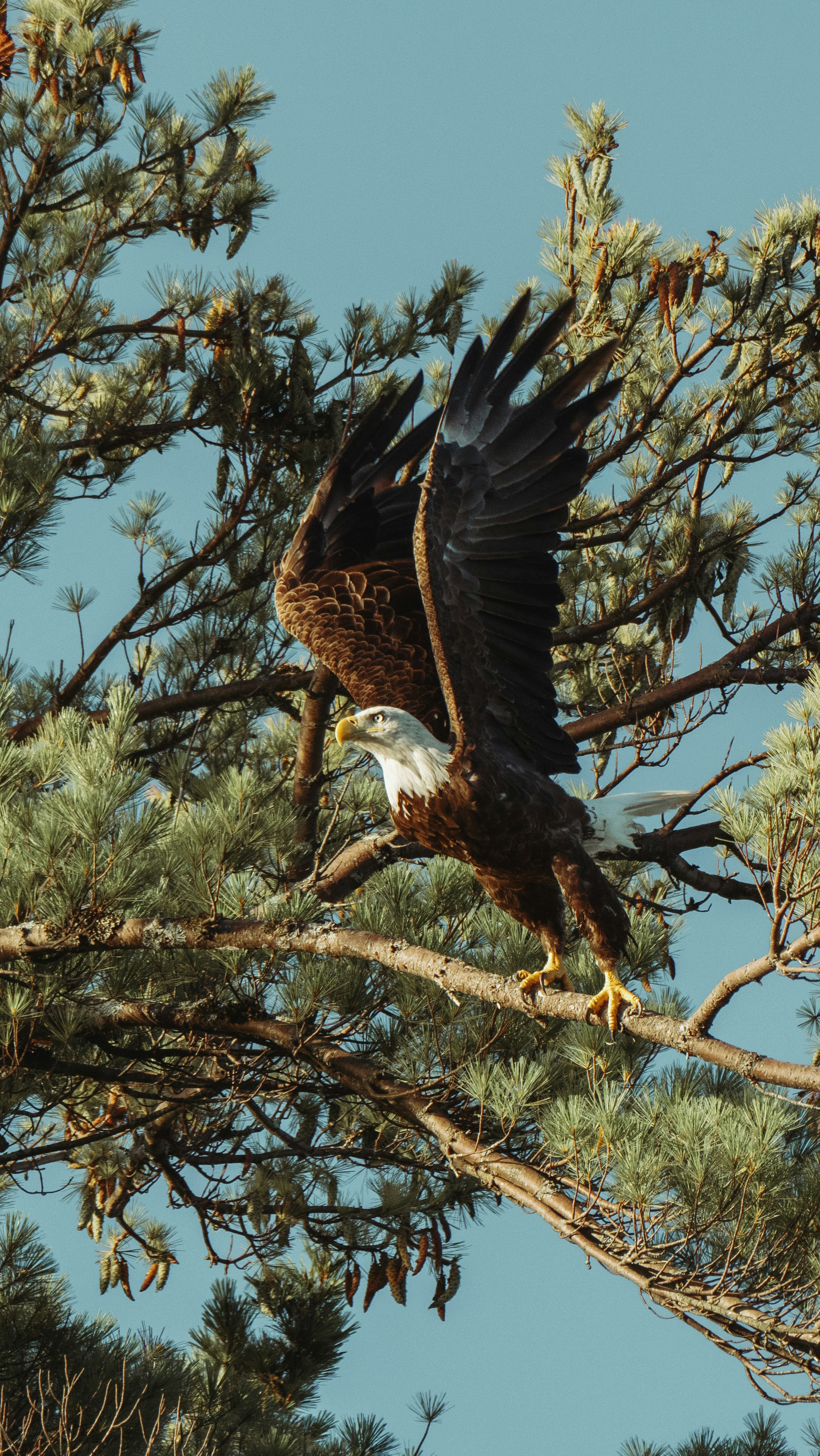
Born from the imagination of C.S. Lewis into the land of Narnia, Farsight was a talking eagle who served as a messenger to the King. True to his nature and name, his eyesight was spectacular. He saw what others couldn’t.

I guess I garnered the name thanks to my ability to notice. The deer on the field edge, the chickadee perched, the missing lego over there. By nature it seems, I’m often able to see what others can’t. Yet here’s the truth – I’m not eagle-eyed. My ability to see is no more than 20/20, in fact without my glasses, it’s much less than that.

I’m convinced, however, that seeing—and more importantly, noticing—is a nurtured ability. It’s practiced and perfected. It’s work.

The poet says, “to pay attention is our endless and proper work.” The priest agrees: “My only prayer practice is attention.”

There’s a sacred discipline to the art of noticing. Paying attention to the budding branch, the singing bird, the forming storm, is no doubt an act of spiritual practice. This act of noticing makes an opportunity to at least acknowledge God, and at best encounter him.

Worship him. See him, hear him, smell him, touch him, taste him. Worship him.

And yes, this takes practice. It’s not hyperbole to say that there are more voices and visions vying for our attention now more than there ever have been, so this work may be more difficult than ever as well. Hard work is good work, beloved.

Begin here with an intentional choice today:

go for a walk,
get a house plant,
look up from your phone.
gaze at the gluten structure of a piece of bread,
think about your fingerprints,
look up from your phone.
listen to a bird song,
listen to a secular song,
look up from your phone.

Look up, look around, look above and below. Open your eyes to see that there’s evidence of resurrection everywhere you look. But you have to look.

God can be and is revealed in all manner of ordinary things, especially created things. There are reflections of his goodness in just about every corner, crack, and crevasse if you’re looking for him. May we be formed into a people who are always looking, noticing, and behold God wherever he may be found.

Grace and peace,
Pastor Alexander

Up Next
From this Tag: mindfulness
October 27, 2026 • 4 Minute Read
Daddy, I'm scared
Our youngest son has been doing some exposure therapy. For the last few weeks, our morning drive to daycare has taken on a bit of a different complexion. The air is chilling requiring different dress, the trees that flank the roads are exchanging their summer skin for their autumn glory, and what was formerly clean-cut grass has been draped in darkness. “Those spooky things are not good for me” he began saying from the backseat as ghosts and ghouls, warlocks and witches watched us pull into the neighbourhood. It’s almost Halloween, and he’s noticing. Aiden is a feeler. He’s a small boy with a large capacity for emotion. He covers his ears at loud sounds, conceals his eyes at scary sights, and is not shy to use his voice to say what’s going on in his heart. These things that he’s frightened of—bolts of lightning, monsters at night, witches on the road—he can’t hide from. He’s learning to face them. So on his daily walks with his classmates through the neighbourhood, he encounters the falltime decorations as they come. A bat hung on a limb, the Paw Patrol inflated and ready to roll, a demonic clown. Each step he takes under their gaze on the sidewalk is a step he takes towards the light. He’s learning that he doesn’t have to be afraid. 

I’m afraid that the exposure has been a bit too effective, however, as yesterday his backseat voice called out excitedly, “Dad, that one is good for me! You love that one too, Dad.” I’m not afraid of all of these Halloween decorations, but I am curious about them. Why do we dress our homes in death? What does it profit us to intentionally stoke fear? I think we all have an innate sense of the supernatural. We live in a regrettably disenchanted world paved in concrete and laced with cynicism. We so desperately want to believe that the world is sacred and that there is something truly spiritual beyond what we can see that we go to great lengths to reach out and touch it, if only for a moment. We tell ghost stories around the campfire, we listen to true crime podcasts, we watch scary movies, we dress up for Halloween. I do believe there is a discerning line between what is good and what is evil, what is profitable and what is deplorable. That line is certainly not black and white or set in stone. Halloween itself was a day marked on the sacred calendar long before it was a contested day in cultural Christianity. In fact, the secular celebrations and decorations are rooted in ancient religious practice. Halloween, or All Hallows Eve, is the night that precedes a Christian holiday called All-Hallows, or All Saints Day. For over a thousand years, All Saints Day has been set apart to remember great saints who lived faithful lives and often died the death of a martyr. It’s why I’ve grown quite fond of the day. For each day this fall that the pumpkins dress our porch and the goblins dress those of our neighbours, I’ll revel in the opportunity to mock the powers and principalities of this world. Yes, I believe in demons and dark things. I’m convinced of the presence of things unseen. I don’t confess, however, that they have any power over my past, present, or future. We will not be afraid. I agree with the Creator of the cosmos that death has been defeated, and life everlasting is our inheritance. Nothing can steal or scare that away from me. So take heart, dear Christian. Do not be afraid. Mock the darkness, revel in the light. God is alive. Grace and peace, Pastor Alexander
October 6, 2026 • 3 Minute Read
Who created this?
Glance at the sun. See the moon and the stars. Gaze at the beauty of earth’s greenings. Now, think. These words were written about a thousand years ago by a woman called Hildegard. She was a mystic visionary with eyes to see God in creation and a voice to tell of the glories she beheld. This weekend in our church community, Joy put on Hildegard’s mantle and encouraged us not only to think, but to tell of where we have recently seen the glories and goodness of God. Many of us chose to speak up and share of our experiences, and notably, every single testimony spoke of encountering God in the created world. You heard God’s voice in the loon’s call and felt His nearness in the monarch’s flutter. You saw His face in the setting sun and His glory in the clouds. The moon, the stars, and the maple trees all testified of His handiwork. It’s no coincidence that we see and experience God in the created world. The cosmos is His self-revelation. It’s been said that “Christ wears two shoes in the world: Scripture and nature. Both are necessary to understand the Lord, and at no stage can creation be seen as a separation of things from God." Creation is the manifest image of a creator God. The rocks cry out His praise. And so do we. Joy’s word to us didn’t end with, “Now, think.” That’s where it started. It ended with, “Now, say!” Think of the goodness of God, then speak your doxology. Give your glory sayings a voice! To be able to speak of what we’ve seen, we have to have first seen. If your vision of God feels cloudy and the evidence of His work seems hard to find, consider this evening practice. Tonight before you rest, pause for a moment of prayer. Give the time between turning off the screen and closing your eyes for sleep to God. Come to quiet, and acknowledge the presence of God. Breathe slowly and deeply. Inhale his love, exhale your hurry. Review your day like a film in your mind. Let each moment come to you—don’t stress or strive to remember them all—and as you see yourself move through the day that was, look for God. Where did I notice God? Where did God feel far off? Notice your emotions. Pay attention to what comes up, and let God meet you there. No emotion is unwelcome. Give your gratitude to God for all the things you received. Give your confessions to God for all the things you did or neglected to do. This type of evening prayer is called an examen, and it’s a good daily ritual to begin practicing. It will give you a shape for prayer when you don’t know what to say, it will heighten your awareness to God’s constant movement in your life, and it will grow your heart in gratitude to the Creator of all things. God, give us eyes to see and a voice to speak of all of your wondrous works. Grace and peace, Pastor Alexander
July 1, 2026 • 3 Minute Read
I'm not an ornithologist
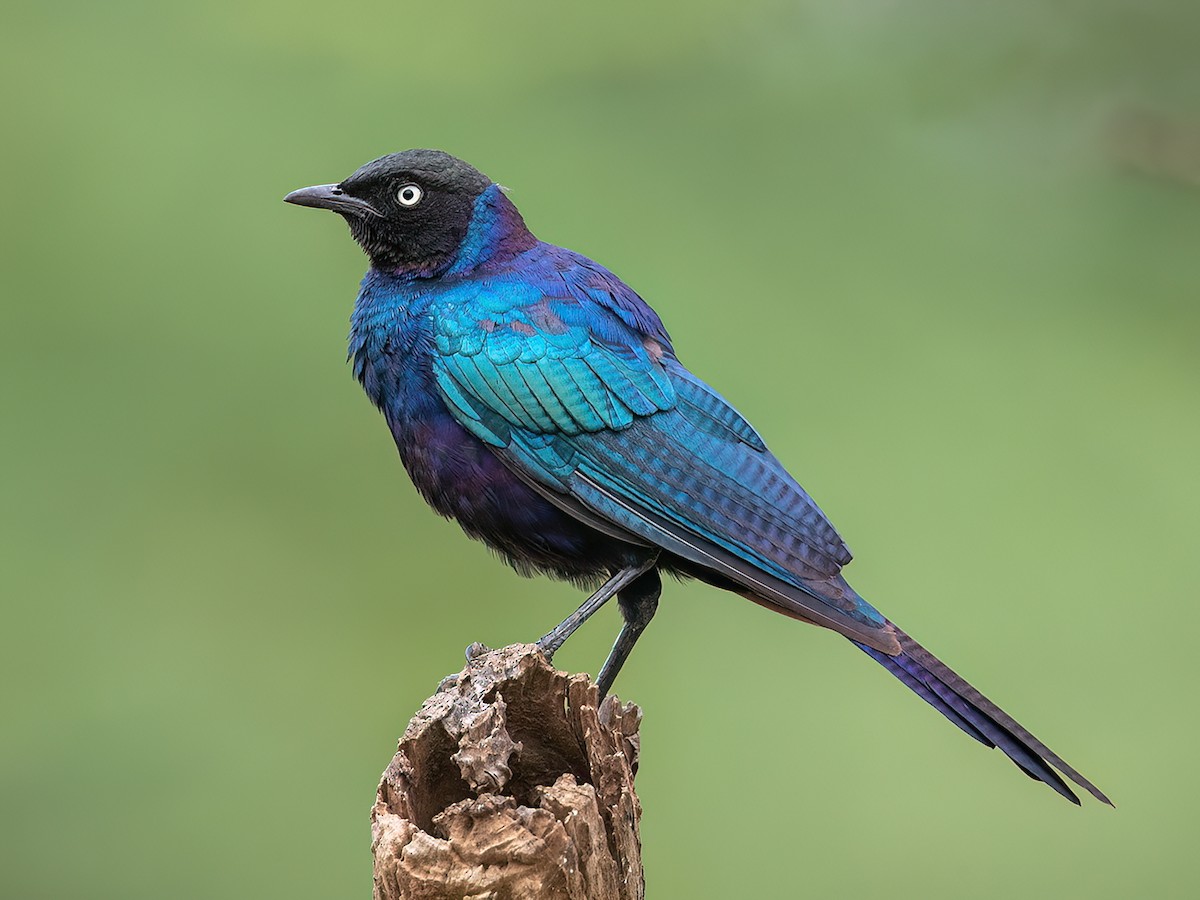
“Look up!” The two words that are ever ready on the tips of the tongues of all birders. Folks who are scientifically engaged in the study of birds get a fancy name: ornithologist. But for me and my clan (and many of you who are reading), we’re just birders. Not just birders, though. Birders are people who notice. Noticing, especially in our digital age that lures us constantly into attention deficit, is an act of spiritual practice. I’ve written to you recently about that. Look up, and notice what you see.How to see God From my stoop here in our temporary home in Jinja, Uganda, I can currently see and hear many birds. It’s been the joy of our time here by the Nile river. The Maribou Stock looms largely overhead. The Eastern Plantain-eater is somewhere in the distance, calling out with vocals that are easily mistaken for a monkey. And just in front of me, a Blue-breasted Kingfisher sits perched on a branch. It’s brilliant blue feathers arrest my attention. Her fire-engine beak is poised for a catch. Thanks to the Merlin Bird App, we’ve been able to identify many of the new bird species that we are seeing and hearing. I have a “life list” of 165 bird species logged on the app. One species in particular sings his morning song to us daily. Merlin describes his tune as “loud and complex vocalizations, including a mix of rattles, scratches, and piercing whistles.” In my words, I’d describe the song as beautiful—a complicated set of diverse sounds, but each with purpose and none without meaning. When I looked up I expected to see a bird that visually matched the complexity of her song. What I saw was unexpected: a plain black bird. At first sight, the Rüppell’s Starling appears boring and bland. Black. Singular. But when she soars into the sun, she shines iridescent. Purple and green, blue and maroon. Simply stunning. One caught the attention of our entire family just the other day, shining in the sun as she sat atop the iron fence. We all looked up. As she drew our attention up and towards the sky, we saw a splash of another colour: electric green. There, next to our beloved Starling, was a four-foot-long Battersby Green Snake. The tale of capturing that snake is another story for another time, because I’ve rambled on about birds for long enough to arrive at the point. Looking up as an act of spiritual practice, the art of noticing, is not just to see the good, the true, and the beautiful. Looking up from our feet as we journey on the path towards home alerts us to dangers and diversions that could cause us to stray. Our spiritual formation is not a destination, it’s a journey. It’s been called “a pilgrimage of the soul—if we want to keep growing, we have to stay on the journey, we have to stay on the road.” We must resist the despondence of staring at our feet as we trudge along. Instead, with our eyes up, we look for the signposts of the journey towards home. We meet at the Table, and receive our food for the journey. And we walk with our heads held high along the narrow path, for on our pilgrimage, we are being saved. Grace and peace, Pastor Alexander
April 21, 2026 • 3 Minute Read
How to see God
My dad takes a conservative approach to giving and using nicknames. For the most part, he’ll call you by your given name. That was my experience as a child with one exception – he affectionately called me Farsight. Born from the imagination of C.S. Lewis into the land of Narnia, Farsight was a talking eagle who served as a messenger to the King. True to his nature and name, his eyesight was spectacular. He saw what others couldn’t. I guess I garnered the name thanks to my ability to notice. The deer on the field edge, the chickadee perched, the missing lego over there. By nature it seems, I’m often able to see what others can’t. Yet here’s the truth – I’m not eagle-eyed. My ability to see is no more than 20/20, in fact without my glasses, it’s much less than that. I’m convinced, however, that seeing—and more importantly, noticing—is a nurtured ability. It’s practiced and perfected. It’s work. The poet says, “to pay attention is our endless and proper work.” The priest agrees: “My only prayer practice is attention.” There’s a sacred discipline to the art of noticing. Paying attention to the budding branch, the singing bird, the forming storm, is no doubt an act of spiritual practice. This act of noticing makes an opportunity to at least acknowledge God, and at best encounter him. Worship him. See him, hear him, smell him, touch him, taste him. Worship him. And yes, this takes practice. It’s not hyperbole to say that there are more voices and visions vying for our attention now more than there ever have been, so this work may be more difficult than ever as well. Hard work is good work, beloved. Begin here with an intentional choice today: go for a walk, get a house plant, look up from your phone. gaze at the gluten structure of a piece of bread, think about your fingerprints, look up from your phone. listen to a bird song, listen to a secular song, look up from your phone. Look up, look around, look above and below. Open your eyes to see that there’s evidence of resurrection everywhere you look. But you have to look. God can be and is revealed in all manner of ordinary things, especially created things. There are reflections of his goodness in just about every corner, crack, and crevasse if you’re looking for him. May we be formed into a people who are always looking, noticing, and behold God wherever he may be found. Grace and peace, Pastor Alexander

June 5, 2023 • 3 Minute Read
I met God the other night
I met God the other night while I was washing my car. I made the mistake of buying a black car. In fact, we have two black cars. It’s not an objective mistake in the sense that black cars are worse than any other colour car by any meaningful metric. The nature of black paint however is that it almost never looks clean. Any spot of water, dirt, or pollen (of which there has been plenty lately) seems to be accentuated on a black canvas, and frankly is a glaring sore to my eye. That’s just me, that’s how I’m wired. You likely don’t care too much if your car is spotless or not and that’s good for you - sincerely, it’s good for you. I’m wired differently though, but thankfully I’m also inclined to enjoy washing my car by hand. So I took a look at the forecast to see how long my labour would be worth, and with nothing but clear skies in sight I set out to wash the car. Asher was asleep, the evening was clear and cool, it was serene. With supplies in hand I made my move towards the driveway and there was God, waiting to met me. There’s a monkish way of moving through the world called liber mundi - “the world as a book”. It’s a way of living that moves slowly through the created cosmos, with eyes and ears open and attentive to see a story revealed through creation, as if it were a book to read. For us Christians, we believe that the world is the Lord’s, and it is a very reflection of his image. A revelation of sorts. God met me in the driveway in the stillness of being dedicated to one singular task, outside of the office and the home, and in the quiet of the evening. Without any external output or stimulus (and even without my AirPods in my ears plugging up my senses from the world around me), I was able to perceive and receive the peace of God while kneeling in soapy water on the tarmac. I’m not great at this way of living, and I wouldn’t even go as far as suggest that I’m good at it - but I’m trying. I’m trying to see glory in potato flowers and dandelions. I’m hoping to move on my feet and my pedals more often than I do on rubber powered by cylinders. I’m attempting to listen to less information (podcasts, sermons, etc.) and listen more to friends, family, and foes. I’m learning that the world is a book. I want to read it. Avarie, Anugraha, and Vienna begin their journey home from Nepal today. Pray for them whenever you remember them, and look forward to welcoming them home on Sunday! Grace and peace, Pastor Alexander